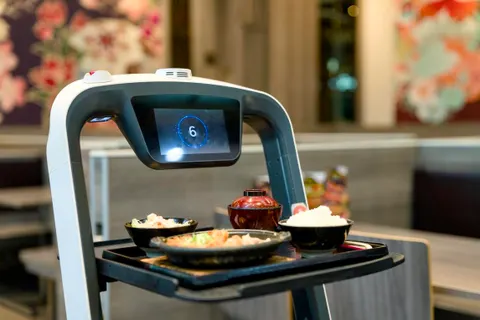

Artificial intelligence is increasingly embedded in restaurant operations, analyzing orders to improve accuracy and speed, forecasting demand to optimize staffing and inventory, and personalizing guest recommendations. Real-time data visibility enables swift service adjustments, while governance and monitoring build accountability and trust. Benefits include cost reductions, enhanced guest satisfaction, and smarter menu planning, yet challenges persist around privacy, bias, and ethics. The balance between innovation and safeguards will shape what comes next, inviting continued examination of practical implementations and risks.
How Artificial Intelligence Is Used in Restaurants
Artificial intelligence is increasingly integrated into restaurant operations to enhance efficiency, accuracy, and guest satisfaction. Systems analyze orders, forecast demand, optimize staffing, and personalize recommendations.
Key considerations include AI ethics, data ownership, guest privacy, and bias mitigation, ensuring transparent data use and responsible deployment.
Clear governance reduces risk, supports accountability, and fosters trust, enabling owners to balance innovation with consumer rights and freedom.
AI Tools Improving Restaurant Operations
AI tools are transforming restaurant operations by streamlining daily workflows, improving accuracy, and boosting guest satisfaction. These systems optimize menu forecasting and staff scheduling, aligning demand with capacity while reducing waste and overtime. They enable real-time data visibility, enabling managers to adjust orders, shifts, and service levels swiftly. The result is consistent service, lower costs, and greater operational resilience for independent and chain venues alike.
Benefits and Challenges of AI in Restaurants
Analyzing the benefits and challenges of AI in restaurants reveals a dual trajectory: enhanced efficiency, accuracy, and guest experience alongside concerns about cost, data privacy, and workforce impact.
AI deployment can streamline ordering, personalization, and inventory, improving user experience while risking data privacy violations if mismanaged.
Careful governance, transparent data practices, and continuous monitoring balance gains with safeguards and ethical considerations.
The Future of AI in the Restaurant Industry
Future forecasting points to customer-centric customization and labor optimization, while ethical implementation remains essential to guard privacy, ensure bias reduction, and sustain trust in automated decision processes.
Frequently Asked Questions
How Do AI Systems Handle Dietary Restrictions and Allergies Safely?
AI systems ensure dietary compliance by enforcing ingredient tagging, cross-checking menus, and updating records; they perform allergy risk assessment with automated flagging, real-time alerts, and audit trails, enabling safer kitchen workflows and informed, freedom-oriented dining choices.
Can AI Predict Table Turnover Without Human Input or Bias?
A recent study shows AI can estimate future seating demand with 87% accuracy. Can AI predict table turnover without human input or bias? It aims for predictive turnover with bias mitigation, though human oversight remains prudent to validate results.
Do AI Purchases or Menus Adapt to Local Cultural Preferences?
AI purchases and menus do adapt to local cultural preferences, reflecting localization trends and cultural adaptation as core mechanisms, enabling menus and sourcing to align with regional tastes while preserving overarching brand standards and operational efficiency.
How Secure Is Customer Data Collected by Ai-Enabled Kiosks?
Customer data collected by AI-enabled kiosks presents privacy risks, mitigated by data encryption and robust access controls. Analysts note that security largely depends on encryption integrity, key management, and compliance frameworks, balancing transparency, autonomy, and risk in deployment.
Will AI Replace All Front-Of-House Staff in the Future?
AI will not replace all front-of-house staff; it will reshape roles. As a traveler notes, automation is a map, not a destination. The discussion centers on AI ethics and labor displacement, guiding cautious, flexible workforce planning.
Conclusion
AI in restaurants optimizes orders, forecasts demand, and personalizes guest experiences while embedding governance to maintain trust. A chef compares AI to a reliable sous-chef: fast, precise, and unobtrusive, yet always present to catch subtle mistakes. A data point shows daily wait times drop 20% in tech-enabled kitchens when demand shifts occur. The story underscores balance—leveraging efficiency without compromising privacy, ethics, or human touch—toward sustainable, customer-centric dining experiences.